
For roasters
Natural Process Coffee: What It Is and How It Changes Taste
Natural process coffee dries whole cherries, which gives a sweeter, fuller, fruitier cup. How it compares with washed and honey, and what roasters should check.
Updated October 1, 2026 · 4 min read
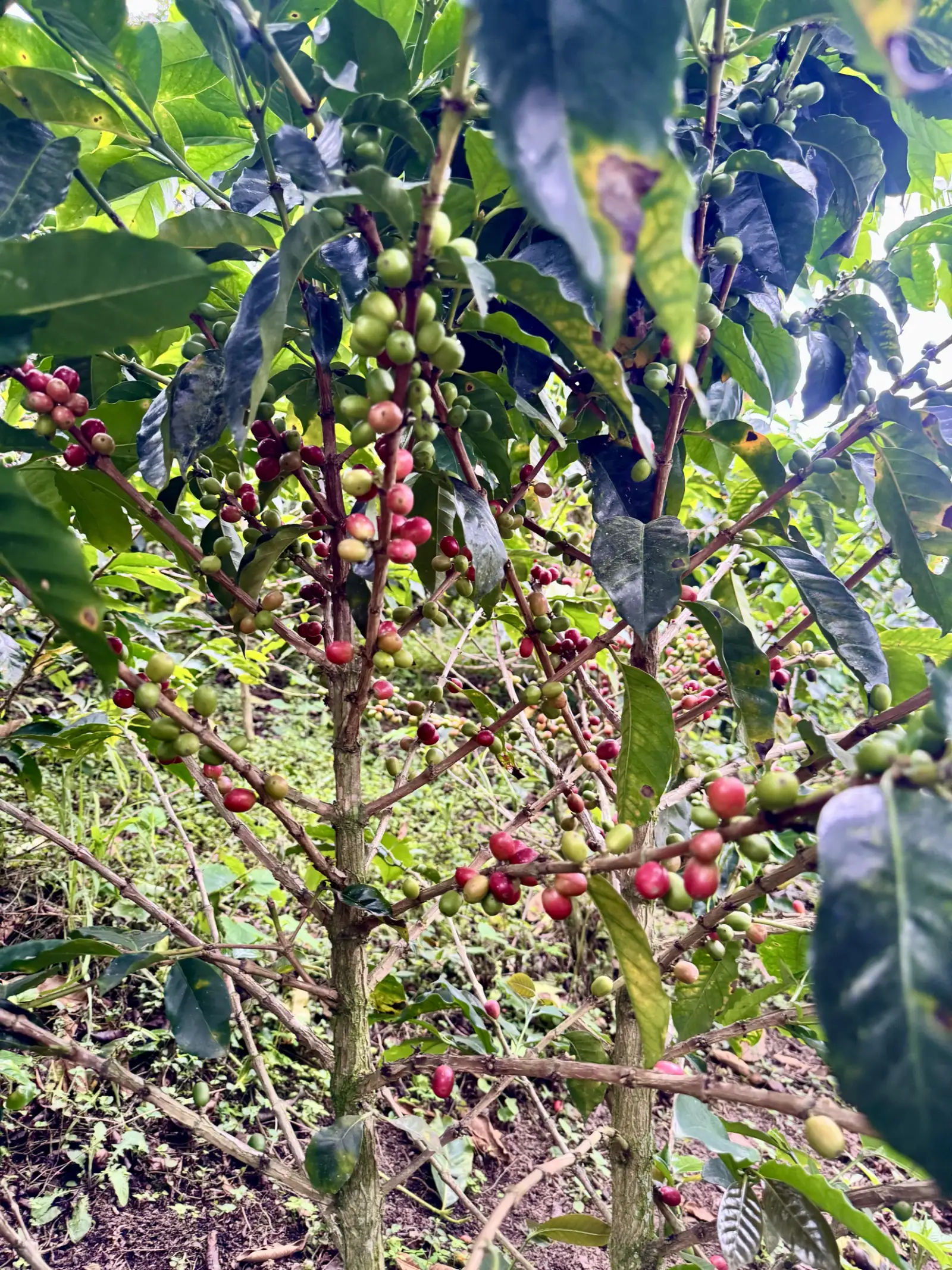
Natural process coffee is dried inside the whole cherry, with skin, pulp and mucilage still on the seed, and hulled only after it is dry. The fruit sugars stay in contact with the bean for weeks, so naturals usually taste sweeter, fruitier and fuller-bodied than washed coffee, with lower, softer acidity. The trade-off is risk: uneven drying or fermentation can ruin a lot.
What is natural process coffee?
Natural, also called dry process, is the oldest way to get the seed out of a coffee cherry. Producers pick the cherries and spread them on patios, raised beds or similar drying surfaces. They turn them regularly so they don't mold, and they let the sun do the work. Perfect Daily Grind's processing primer describes it as drying the whole fruit and notes that it needs the right climate to dry in time. Heavy rain can split the cherries and cause problems.
Only once the cherry is dry does a mill remove the husk and leave you the green bean. The moisture reading at that point is one of the first numbers to check on your green coffee spec sheet.
How does natural processing change the cup?
Because the bean dries surrounded by fruit, sugars and fruit compounds transfer into it. Achilles lists berries, tropical fruit and a winey character for naturals, with full body and lower acidity. Washed coffees on the same list read as citrus, floral and tea-like, with more clarity.
For a roaster, that means three practical things:
- Sweetness and body come early. Naturals often deliver them without much help from the roast.
- Clarity is lower. If your menu is built on bright, tea-like single origins, a natural sits differently next to them.
- Variation between lots is wider. Two naturals from the same region can taste far apart, so cup each lot rather than trusting the label.
Natural vs washed vs honey: how do they compare?
The same variety from the same farm can taste like three different coffees depending on the process. The comparison below summarizes the general differences. The cup descriptions are typical tendencies, not rules.
| Washed | Honey | Natural | |
|---|---|---|---|
| What is dried | Seed with no mucilage | Seed with part of the mucilage | Whole cherry |
| Drying time | Shortest | In between | Longest |
| Mucilage kept | None | Part of it (more in red and black honey than in yellow) | All of it |
| Typical cup | Citrus, floral, tea-like; high clarity | Caramel, stone fruit, red fruit; medium-full body | Berries, tropical fruit, winey; full body |
| Acidity | Brightest | Rounded | Lowest |
| Defect risk | Low | Medium | High |
Drying times vary with weather and altitude, which is why naturals depend so much on the climate where they are dried.
What is honey process coffee, and where does it sit?
Honey process sits between the other two. The cherry is depulped, but some or all of the sticky mucilage stays on the seed while it dries. Despite the name, no honey is involved. The more mucilage left on, the sweeter and heavier the cup tends to be, which is why producers split honeys into yellow, red and black, from least to most mucilage.
If your customers like the sweetness of a natural but find the fruit too loud, a honey is the usual answer. It keeps rounded acidity and a clean finish, and it carries less defect risk than a full natural.
What should roasters check when buying a natural?
How well the producer controlled the drying decides how good a natural is. Before you buy:
- Ask for the moisture reading. Compare it with the target on the spec sheet; an unevenly dried lot shows up here first.
- Look at the green. Mixed colors, pale or brown beans, and a musty smell are warning signs. Unripe cherries dry brown next to ripe ones, which is a known cause of inconsistent naturals.
- Cup it before the contract. Look for sweet, clean fruit. Fermented, boozy or sour notes mean the lot went too far.
- Plan the roast around sweetness. Medium roasts highlight the sweetness of naturals and honeys, while light roasts keep washed coffees delicate, according to Achilles.
- Order a sample. A sample roasted on your own machine tells you more than a description.
How does this look in a real Colombian natural?
Naturals are also made in Colombia. CORA's retail Caturra is one example. It grows at 1,600 m above sea level on a single farm in vereda Chuscal, Balboa, Risaralda, and it is processed as a natural: the bean dries with the pulp on. It is roasted medium and scores 82.5 on the SCA scale, in the specialty range. The cup shows sweet panela fragrance, milk chocolate and caramel sweetness, light chamomile and hazelnut notes, a delicate body and a clean finish. You can see that product on the Caturra page of the CORA shop.
That is the retail coffee. For any green lot, confirm the processing method on that lot's spec sheet before you buy.
For the variety behind that cup, see our Caturra coffee profile for roasters. For the bigger picture on sourcing from one Colombian farm, including what to ask any supplier, read Colombian green coffee for roasters.
Which process should you choose?
Choose by what your menu needs:
- Washed if you want clarity, brightness and the lowest risk of defects.
- Honey if you want sweetness with structure and a more forgiving lot.
- Natural if you want fruit, body and a standout single origin, and you are willing to cup carefully.
Many roasters carry one of each so customers can compare. If you are building that lineup, request a sample and tell us which profile you are after. Traceable single-farm green coffee from Colombia is what we offer roasters outside the country, with samples and spec sheets, and quotes by lot, FOB.
Keep reading
Complete guide
Green Coffee Supplier Guide: Buying Direct from Colombia
How to buy Colombian green coffee direct from the farm: samples, cupping, FOB quotes, shipping and FDA rules, written for small specialty roasters in the US.
For roasters
Caturra Coffee: A Variety Profile for Roasters
Caturra is a compact Bourbon mutation with medium yield and good quality at altitude. A profile for specialty roasters, with a Colombian lot at 1,600 m.
For roasters
Direct Trade Coffee and Microlots: How to Buy Them
Direct trade has no official definition, and a microlot is a size, not a score. Here is how roasters can tell real traceability from a label and compare offers.